



New episodes fortnightly.
The clinical thinking behind a fully-booked trauma psychologist.
step inside my brain
Obsessed with root causes. Scary committed to getting it right.
Sorry to say it (am I, though?), but a lot of trauma content online is wildly oversimplified.
Possibilities get presented as facts. Complicated problems get neat little explanations. Important distinctions disappear, context gets overlooked, and the details that could completely change how you understand something never even get mentioned.
My mission: give you my brain.
Because you know what they told you. But I know what they missed.
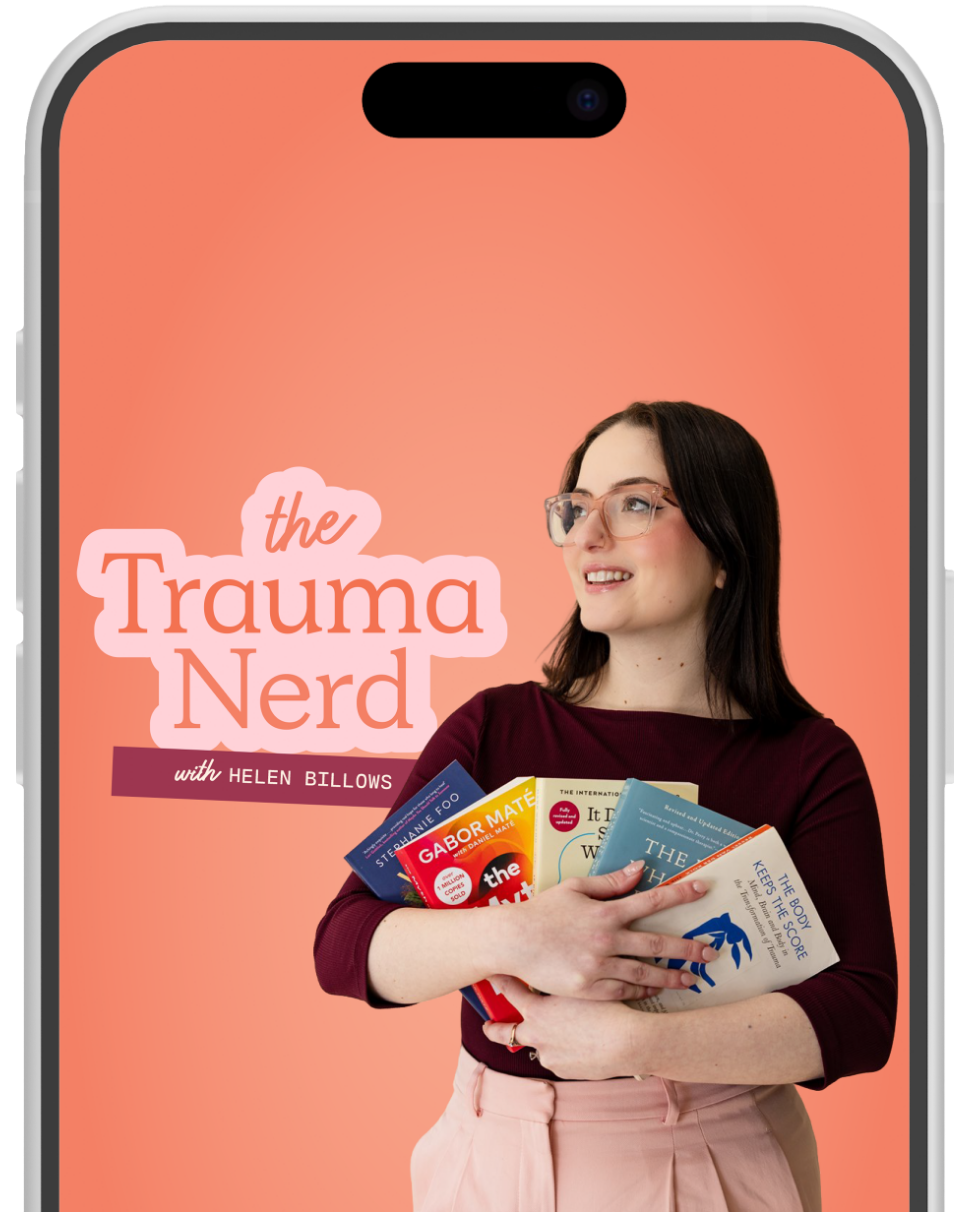
The Trauma Nerd Podcast is where I bring the thinking developed through 7,000+ hours of clinical trauma work to the concepts, questions and rabbit holes that deserve a closer look.
We'll challenge familiar assumptions, pull apart misunderstood concepts, examine why things work the way they do, and get into the clinical nuances that rarely make it into your Instagram feed.
Like why you can logically know something isn’t true but still feel like it is. Or how to tell whether your reaction might be a trauma response… or, just your totally normal human feeling.
Less cliché therapy speak. More "oooooh, I get it now!"

Listen to the newest episode now
Recent episodes

Some people knit. You read about trauma.
Get my monthly take on trauma, triggers, patterns, relationships and healing, with more nuance and a closer look at the things the trauma-sphere tends to oversimplify. Less black-and-white advice, more “ohhh, THAT’S what it is.”